

Summit Counselling Services — Specialty
Child TherapyBig feelings in small people deserve just as much care.
Children aged 5–12 experience real emotional challenges — anxiety, grief, behavioural difficulties, trauma, and the pressures of school and family life. Our registered psychologists offer warm, skilled, age-appropriate support for children and the families who love them.
About Child Therapy
Children don't always have words for what they're carrying.
Children experience the world intensely — but they don't always have the language, the perspective, or the emotional regulation capacity to make sense of what they're feeling. What shows up instead are often behaviours: tantrums, withdrawal, school refusal, aggression, clinginess, sleep problems, or a quietness that something has shifted.
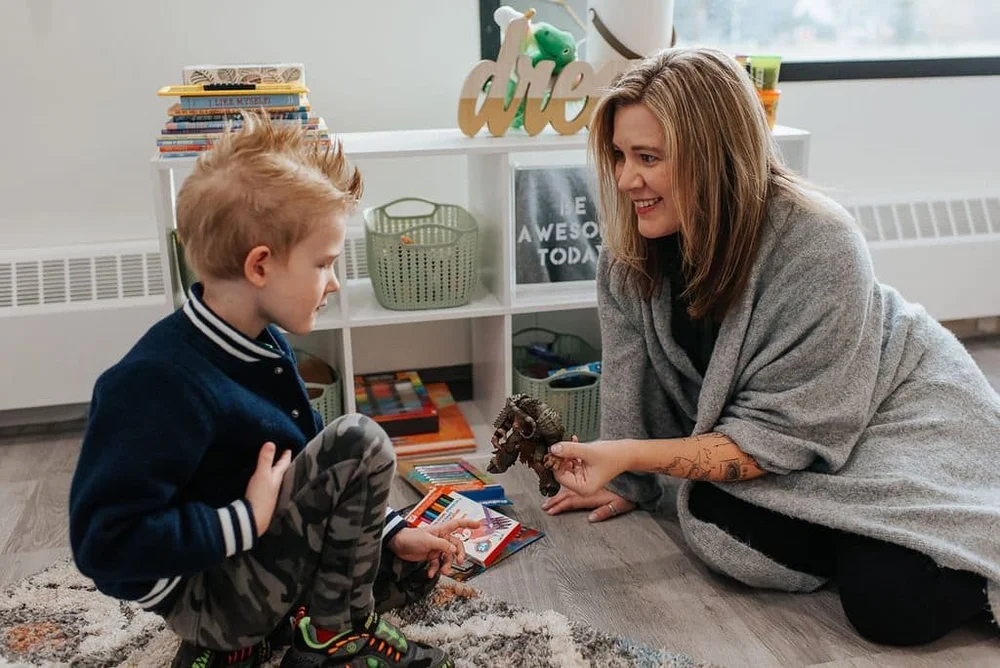
Child therapy meets children where they are. It doesn't expect them to sit and talk about their feelings the way adults do — it uses age-appropriate approaches, including play, that allow children to express, process, and work through their experiences in ways that feel natural rather than foreign.
Early intervention matters. The emotional foundations built in childhood — the ability to regulate feelings, form secure relationships, develop a healthy sense of self — have lasting effects. Helping a child build those foundations now, rather than waiting to address the consequences later, is some of the most valuable therapeutic work there is.
Parents and caregivers are always part of the picture. Our therapists work closely with the adults in a child's life — not just the child in isolation — because children's wellbeing is deeply connected to the environment they live in and the relationships that shape them.
"Children are not small adults. The way we help them is different — gentler, more playful, more indirect. But the outcomes are just as real."
Signs a child might benefit from therapy
- Persistent worry, fear, or anxiety that interferes with daily life
- Significant behaviour changes — increased aggression, defiance, or withdrawal
- School refusal, declining performance, or difficulty concentrating
- Sleep disturbances — nightmares, difficulty falling asleep, or night waking
- Regression to earlier behaviours — bedwetting, thumb sucking, baby talk
- Persistent sadness, low mood, or loss of interest in things they used to enjoy
- Difficulty with friendships or social situations
- Exposure to trauma, abuse, or significant loss
- Adjustment difficulties following a major change — divorce, a move, a new sibling
- Emotional outbursts disproportionate to the situation
- Physical complaints — stomachaches, headaches — with no medical cause
- A diagnosis — ADHD, autism, learning differences — that is affecting their wellbeing
What We Work On
Common concerns in child therapy
Every child is different, and no concern needs to fit neatly into a category. These are some of the most common areas our child therapists work with.
Anxiety & Worry
Separation anxiety, school anxiety, social fears, specific phobias, generalized worry, and OCD — anxiety is one of the most common concerns in childhood. Left unaddressed, childhood anxiety often grows. With the right support, most children see significant improvement.
Behaviour & Emotional Regulation
Frequent meltdowns, aggression, defiance, impulsivity, and difficulty managing big emotions. Therapy helps children understand their emotional experience, build the skills to regulate it, and develop more effective ways of getting what they need.
Trauma & Difficult Experiences
Abuse, neglect, accidents, medical trauma, witnessing frightening events, and other adverse experiences have real and lasting effects on children. Trauma-informed child therapy addresses these experiences in age-appropriate ways — building safety and processing what happened without retraumatization.
Grief & Loss
The death of a parent, grandparent, sibling, or pet. The loss of a relationship through separation or divorce. The loss of a school, a friendship, or a sense of security. Children grieve differently from adults — and they need support that understands those differences.
Family Transitions
Parental separation or divorce, a new blended family, a move, a new sibling, or a parent's illness. Major transitions can destabilize a child's world even when the change itself is positive. Therapy helps children make sense of what's happening and adjust with more security.
Social Difficulties
Difficulty making or keeping friends, social anxiety, bullying, exclusion, and the social challenges that come with neurodivergent presentations. Therapy builds social skills, confidence, and the resilience to navigate peer relationships more effectively.
Low Mood & Depression
Persistent sadness, withdrawal, low energy, and loss of interest in things that used to matter. Depression in children is real and often missed — presenting differently than adult depression. It deserves skilled attention, not watching and waiting.
ADHD & Neurodiversity
Children with ADHD, autism, and other neurodivergent presentations often struggle with the emotional and social demands of daily life alongside their diagnostic profile. Therapy builds foundational skills — regulation, self-understanding, and self-compassion — at the stage when those foundations matter most. See our ADHD & neurodiversity page.
School-Related Concerns
School refusal, test anxiety, learning difficulties, difficulty with transitions, and the emotional impact of academic pressure. Therapy helps children build the confidence, coping skills, and self-regulation to show up and engage with school more effectively.
Our Playroom
Play is how children make sense of the world.
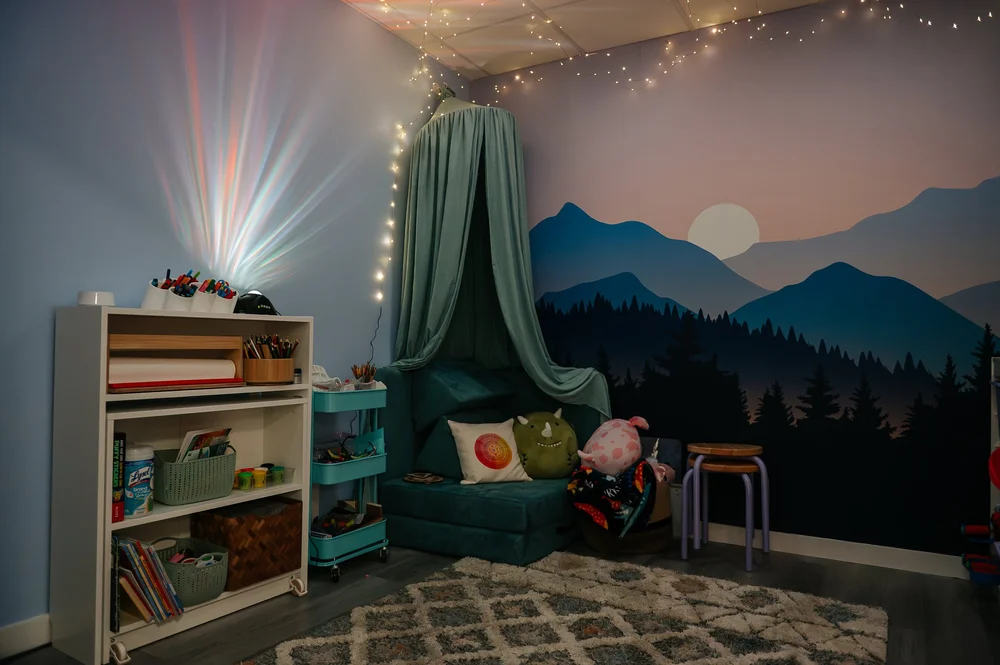
Our dedicated playroom is designed with children in mind — a warm, safe space where children can be themselves without the pressure of performing or explaining. Play therapy uses the natural language of childhood: through sand, art, puppets, and imaginative play, children can express and process experiences they don't yet have words for.
Research consistently shows that play therapy is highly effective for children — often more so than talk-based approaches that expect children to operate the way adults do. The playroom at Summit is equipped to support a range of play-based and expressive approaches, adapted to each child's age, personality, and presenting concerns.
Children don't need to know they're "doing therapy." They just need to play — and a therapist who knows how to be present with them in that play in a way that facilitates healing.
The Process
What to expect from child therapy at Summit
The process is adapted for each child and family — but here's a general sense of how things typically unfold.
Parent Consultation
We start with you. A free 15-minute phone consultation — and often an initial session — with parents or caregivers to understand what's happening, your child's history, and what you're hoping for. Your perspective is essential.
Meeting Your Child
The first session with your child is gentle and unhurried. The therapist's first priority is building a safe, trusting relationship — not immediately diving into difficult material. The therapeutic relationship itself is central to how the work happens.
Child Sessions
Most sessions are one-on-one with your child — using play, art, or other age-appropriate approaches. Your child moves at their own pace. The therapist guides without forcing, follows without losing direction, and holds the work with care.
Parent Involvement
Regular check-ins with you keep the work connected to home. With your child's knowledge, the therapist will share themes and strategies (not private content) and give you tools to support the work between sessions. You are always part of the process.
Therapeutic Approaches
How our therapists work with children
Child therapists adapt their approaches to the child in front of them — using whatever is most appropriate for their age, personality, and presenting concerns.
Play Therapy
The primary modality for most children — using the natural language of play to help children express, explore, and process their inner experience. Both directive and non-directive approaches are used depending on what the child needs. Play therapy is one of the most extensively researched approaches for children's mental health.
Art & Expressive Therapies
Drawing, painting, sandplay, puppets, and other expressive modalities give children who find words difficult another channel for expression. Often used alongside play therapy or as a primary approach for children who connect strongly with visual and creative expression.
Child-Adapted CBT
CBT adapted for children — using age-appropriate language, visuals, and activities to help children understand the connection between thoughts, feelings, and behaviour. Particularly effective for childhood anxiety and mood concerns, with strong evidence for children as young as 7–8.
EMDR for Children
EMDR adapted for children — using child-friendly bilateral stimulation and age-appropriate imagery to process traumatic memories. Children often respond well to EMDR, and the approach can be adapted for younger ages through play-based modifications.
Attachment-Based Approaches
When a child's difficulties are rooted in attachment insecurity — in their relationship with their primary caregivers — attachment-based approaches work to repair and strengthen that bond. Often involves both the child and parent(s) in the work.
Animal-Assisted Therapy
The presence of a therapy animal can be profoundly calming for children — lowering anxiety, increasing willingness to engage, and creating a sense of safety that accelerates the therapeutic relationship. Our animal-assisted therapy is available for children who would benefit from it.
For Parents & Caregivers
Supporting your child starts with supporting you.
Parenting Support at Summit
Children's wellbeing is inseparable from the wellbeing of the adults raising them. Summit offers dedicated parenting support — helping you understand your child's experience, develop effective strategies, manage the stress of parenting a child who is struggling, and strengthen the relationship that matters most to your child's development.
Book a Session
Find us in Edmonton, St. Albert & Windermere
Child therapy is available in person at all three Summit locations, including our dedicated playroom. Virtual sessions are available for children who are more comfortable connecting from home.
Wîhkwêntôwin ᐄᐧᐦᑫᐧᐣᑑᐃᐧᐣ (Oliver)
Grandin Plaza, 2nd Floor
Edmonton, AB
Common Questions
Child therapy — your questions answered
Our Therapists
Therapists who specialize in working with children
The clinicians below specialize in child therapy. Therapist fit is especially important for children — we recommend starting with a free consultation to find the right match for your child's age, personality, and presenting concerns.
Related Support
Other areas we work with
Your child deserves to feel okay. Let's help them get there.
Your first consultation is free — a quick phone call to talk about what's happening and find the right therapist for your child. No commitment required.
We acknowledge that our practice is located in Treaty 6 territory, on the traditional lands of the Cree, Saulteaux, Niitsitapi (Blackfoot), Métis, and Nakota Sioux Peoples, including our Brewery District office in Wîhkwêntôwin ᐄᐧᐦᑫᐧᐣᑑᐃᐧᐣ (Oliver). We recognize that healing and reconciliation is a responsibility shared by all.